Depression Treatment in Raleigh, NC - Your Options and How to Get Started
If you have been searching for depression treatment in Raleigh, NC, you are probably already aware that finding the right provider takes more than a Google search. There are therapists, psychiatrists, PMHNPs, and primary care physicians all offering different types of care - and it is not always clear what each one does, who is the right fit for you, or how to get started.
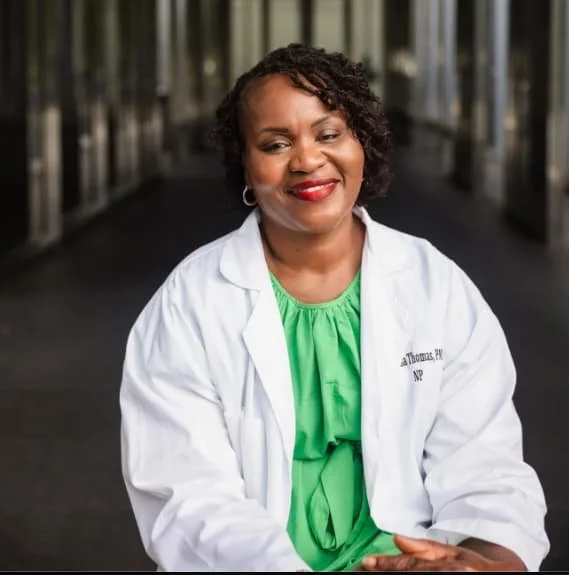
This guide is designed to answer those questions clearly. I am Umi-Aisha Thomas, a board-certified Psychiatric Mental Health Nurse Practitioner practicing in Raleigh and serving patients across all of North Carolina via telehealth. I wrote this because I want anyone looking for depression help in the Triangle area to have a clear, honest picture of what their options are.
What Kind of Provider Do You Actually Need?
The first step is understanding the difference between the main types of depression treatment providers, because they offer fundamentally different kinds of help:
Therapists and Counselors
Licensed therapists - including LCSWs, LPCs, and psychologists - provide different forms Psychotherapy. They help you explore the emotional, relational, and behavioral factors that contribute to depression. Therapy is evidence-based and effective for many people. However, therapists cannot prescribe medication in North Carolina.
Primary Care Physicians
Many people first receive antidepressant prescriptions from their family doctor or PCP. PCPs can prescribe the most common antidepressants and often manage mild to moderate depression. Where they have limitations is in complex presentations, treatment-resistant depression, or when a more thorough psychiatric evaluation is needed.
Psychiatrists and PMHNPs
Psychiatrists (MD or DO) and Psychiatric Mental Health Nurse Practitioners (PMHNP-BC) are specialists in psychiatric diagnosis and medication management. They conduct comprehensive evaluations, diagnose mental health conditions with greater depth than a general practitioner, prescribe and manage psychiatric medications, and coordinate care with therapists. At Renew Wellness, I provide medication management alongside supportive therapy in every appointment.
Depression Treatment Options in the Raleigh Area
Cognitive Behavioral Therapy (CBT)
CBT is one of the most researched and effective forms of talk therapy for depression. It focuses on identifying and changing thought patterns and behaviors that maintain depression. CBT is particularly effective for mild to moderate depression and for patients who want skills-based tools they can use independently.
Medication Management
For moderate to severe depression, or for depression that has not responded adequately to therapy, psychiatric medication is often the most effective intervention. Antidepressants work
by addressing the neurochemical imbalances that underlie depression - low serotonin, norepinephrine, and dopamine activity in the areas of the brain that regulate mood, energy, and motivation.
The most commonly prescribed antidepressants for depression include SSRIs such as sertraline, escitalopram, and fluoxetine, as well as SNRIs such as venlafaxine and duloxetine. Medication management is not simply receiving a prescription - it involves a thorough initial evaluation, careful selection of the right medication for your specific presentation, regular follow-up to monitor your response, and adjustments as needed until we find what genuinely works.
Combined Treatment
The strongest evidence for depression treatment consistently supports the combination of medication management and therapy. Medication addresses the neurobiological dimension, reducing the weight of depression enough for therapeutic work to be more productive. Therapy addresses the cognitive and behavioral patterns that maintain depression. Together they produce better outcomes than either alone.
Depression is not a character flaw or a failure of effort. It is a medical condition with neurobiological causes and effective treatments. You do not have to keep living with it.
The Telehealth Advantage for Raleigh-Area Patients
One of the most significant changes in psychiatric care over the past several years is the expansion of telehealth. As a licensed PMHNP in North Carolina, I see patients anywhere in the state via secure video - which means you do not need to be physically located in Raleigh to access care from a Raleigh-based practice.
For depression in particular, telehealth has meaningful clinical advantages. Getting out of bed and driving to an appointment when you are in a depressive episode is genuinely hard. Being able to attend your appointment from home - in a familiar, comfortable space - removes one of the most common barriers to consistent treatment. Research consistently shows that telehealth patients with depression maintain appointment attendance at higher rates than in-person patients, which directly improves outcomes.
How to Find the Right Depression Provider in Raleigh
If you are looking for depression treatment in the Raleigh area, here is a practical starting point:
Clarify what you need. If you want therapy, start with a therapist. If you have had therapy but are not improving, or if your depression is moderate to severe, a psychiatric evaluation is the appropriate next step.
Check your insurance. Call your insurance provider and ask specifically whether psychiatric medication management with a PMHNP is covered. At Renew Wellness, we accept Aetna, BCBS NC, UnitedHealthcare, Cigna, Healthy Blue, Amerihealth Caritas, and United Healthcare Community Plan.
Book a comprehensive intake - not just a medication check. Look for a provider who conducts a thorough evaluation before prescribing, who asks about your full history, and who explains your options rather than simply writing a prescription.
Consider telehealth seriously. It removes geographic and logistical barriers without reducing the quality of care.
Getting Started at Renew Wellness
If you are ready to take the next step, booking an intake appointment at Renew Wellness is straightforward. No referral is required. The initial appointment is 60 minutes and covers your full symptom history, previous treatment, and goals. By the end, you will have a clear clinical picture and a personalized plan.
We see patients across all of North Carolina - from Raleigh, Cary, Durham, and Chapel Hill to Greensboro, Charlotte, Wilmington, and beyond. Most major insurance plans are accepted and self-pay rates are available.
❓ Frequently Asked Questions
Q: What is the difference between seeing a PMHNP and a psychiatrist for depression in NC?
A: Both are qualified to diagnose depression and prescribe medication including antidepressants. A psychiatrist holds an MD or DO and completed a psychiatric residency. A PMHNP holds a nursing degree and completed a specialized psychiatric graduate program. In North Carolina, PMHNPs practice with full prescriptive authority. Many patients find PMHNPs offer longer appointment times and a more conversational clinical approach. The clinical outcomes for medication management are equivalent between the two provider types.
Q: How long does depression treatment take?
A: This depends on the severity of your depression, how long it has been present, and whether other conditions are involved. For a first depressive episode treated with the right medication, many patients notice meaningful improvement within 4 to 8 weeks of starting treatment. Full remission often takes 3 to 6 months of consistent treatment. Most guidelines recommend staying on antidepressants for at least 6 to 12 months after remission to reduce the risk of relapse.
Q: Can I get antidepressants via telehealth in North Carolina?
A: Yes. Licensed psychiatric providers in North Carolina can evaluate, diagnose, and prescribe antidepressants via telehealth. Prescriptions are sent electronically to your preferred pharmacy. No in-person visit is required. This includes most commonly prescribed antidepressants such as sertraline, escitalopram, fluoxetine, venlafaxine, and bupropion.
Q: What if antidepressants have not worked for me before?
A: Previous medication not working is common and does not mean medication management cannot help you. There are many antidepressants with different mechanisms, and finding the right one is often a process of evaluation and adjustment. It also raises the important question of whether the original diagnosis was complete - in some cases, depression that does not respond to antidepressants is actually bipolar disorder, which requires a different treatment approach. A thorough psychiatric evaluation can clarify this.
Q: Does Renew Wellness accept Medicaid for depression treatment?
A: Yes. We accept several Medicaid plans including Healthy Blue, Amerihealth Caritas of North Carolina, and United Healthcare Community Plan. Call your Medicaid plan's member services line to confirm that Renew Wellness is in-network before booking your first appointment.
References & Further Reading
Depression - National Institute of Mental Health (NIMH)
https://www.nimh.nih.gov/health/topics/depression
Telehealth for Mental Health - American Psychiatric Association
https://www.psychiatry.org/patients-families/telehealth
APA Clinical Practice Guideline for Depression
https://www.apa.org/depression-guideline
Ready to take the next step?
At Renew Wellness & Behavioral Health, Umi-Aisha Thomas, PMHNP-BC, offers personalized psychiatric medication management via telehealth across all of North Carolina.
Book your intake at renewwellnessbh.com - Call: (984) 308-3678